
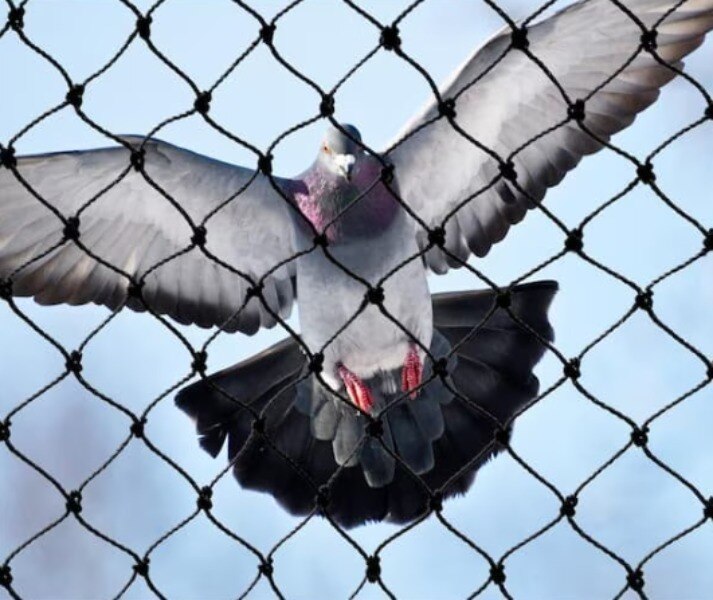
Pune’s southwest monsoon brings heavy rain, strong wind, damp surfaces and difficult balcony access just as pigeons are looking for sheltered nesting places. By checking the building early, you can identify the right bird-proofing method, repair weak fixing surfaces and close entry points before a storm turns a small gap into a recurring problem.
Key takeaways
- Install before sustained rain while access and surfaces are dry.
- Match the method to the opening: netting, perimeter barriers or ledge protection.
- Clean droppings, nests and debris before sealing the space.
- Inspect tension, edges and fixings after the first heavy rains.
Why install bird netting before Pune’s first sustained rains?
Install bird netting before Pune’s first sustained rains because dry conditions make the structure easier to inspect, reach and fix. Pune’s main southwest monsoon usually runs from June through September, so bird netting for before monsoon in Pune is a pre-season inspection and installation job, not an emergency response after the first storm.
- Check anchors, edge cables and corners before rain exposes weak fixings. Damp walls, wind and storm access make repairs slower and less safe.
- Close the opening before nesting activity, droppings and loose nesting material accumulate. Delaying the work can leave blocked drains, stained wet walls and debris trapped behind the proposed barrier.
- Keep access routes clear for ladders, scaffolding or rope access. Rain, slippery surfaces and strong gusts can turn a straightforward installation into difficult work.
An outdoor-rated, UV-stabilised net is a permanent exclusion barrier, not a product to remove after September. Taking it down can reopen the same roosting and nesting route, while repeated fixing creates new gaps.
Design still matters. Netting can collect leaves and reduce some airflow, so leave drainage outlets unobstructed and provide a practical cleaning route. Inspect cracks, loose plaster, rusting grills and failed sealant first; an anchor in deteriorated material can pull out when a wet net catches wind.
Check for active nests and arrange humane handling under applicable wildlife rules before sealing the space.
What should you inspect, and which bird-proofing method fits the opening?
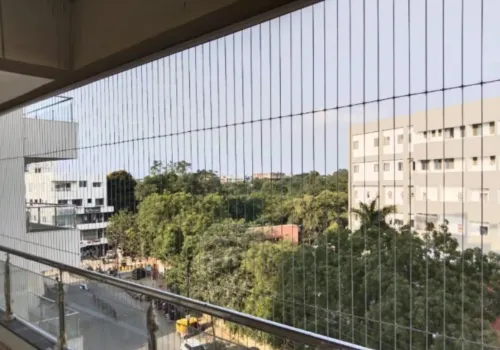
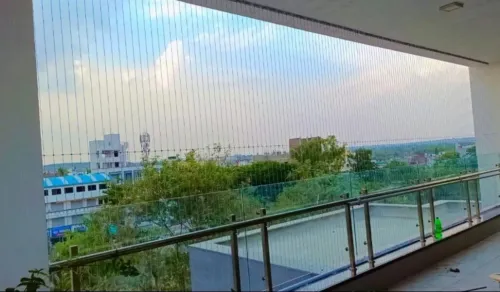
Inspect every boundary, not just the balcony’s front face. Effective bird netting for balconies in Pune must close the usable opening continuously; pigeons can enter from the sides, below the railing, through ceiling-to-wall junctions, and around pipes or AC penetrations.
- Balcony: check corners, side walls, the railing underside, sliding-door tracks, open windows and gaps around grills.
- Service areas: inspect AC outdoor units, refrigerant pipes, drain lines, ducts and vertical shafts.
- Utility spaces: check ledges, conduits, plumbing penetrations and ceiling-to-wall joints.
- Terrace: inspect parapets, terrace edges and neighbouring access points.
| Opening or problem | Suitable method | When it applies |
|---|---|---|
| Open balcony | Continuous enclosure | The whole balcony needs a closed perimeter |
| Single exposed ledge | Ledge treatment or pigeon spikes | Birds perch in one defined location |
| Vertical shaft | Shaft enclosure | Birds enter a service void or duct shaft |
| Building-wide façade or inaccessible duct | Façade screening, access-panel sealing or coordinated building work | Entry occurs beyond one home’s reachable perimeter |
Bird netting is a physical exclusion barrier, not a repellent. It stops entry only inside the closed perimeter, so an exposed parapet or neighbouring façade remains unprotected. Do not specify a balcony enclosure for a single perch, or spikes where birds enter through a shaft; the wrong method leaves the actual route open.
What must you clean and repair before closing the space?
Prepare the opening before installers arrive: clean contamination, identify wildlife, and repair every surface and service point that the new barrier will depend on.
1. Dampen pigeon droppings before removal; wear gloves and a well-fitting mask, and avoid dry sweeping. Remove loose nesting material without disturbing a nest.
2. Check every corner, ledge, grill gap and AC recess for an active nest. Do not seal an adult bird, egg or chick behind the barrier. Arrange humane handling through a qualified local rescuer or wildlife authority, and complete it in compliance with applicable wildlife rules before permanent exclusion.
3. Clear leaves, sludge and droppings from drain outlets. Keep the outlet visible and accessible; a net or debris-covered drain can block during heavy rain.
4. Repair cracked walls and loose plaster, replace failed sealant, and tighten or replace rusting grill parts. These defects are preparation issues, not problems the net can solve.
5. Fix leaking AC drain lines, plumbing points and condensate outlets before installation. Water running onto fixings accelerates corrosion and weakens surrounding surfaces.
Netting does not repair the building envelope. An anchor fixed into deteriorated plaster can pull out when a wet net catches wind, even if the mesh remains intact. For seasonal bird netting in Pune, confirm that drains, emergency access and service routes remain usable after installation, with a practical route for cleaning the lower edge.
Which net, perimeter system and fixing method can withstand monsoon conditions?
A monsoon-ready installation depends on the mesh, perimeter, tension and fixings—not fabric alone. For pigeon exclusion, choose about 19–25 mm mesh; smaller birds need smaller apertures, which reduce visibility and airflow while adding wind load.
| Mesh target | Selection | Trade-off |
|---|---|---|
| Pigeons | 19–25 mm aperture | Better airflow and visibility |
| Sparrows or smaller birds | Smaller aperture | Less visibility and airflow; greater wind load |
| Mosquitoes | Fine insect mesh | Not a substitute for bird exclusion; higher airflow resistance |
Ask for outdoor, UV-stabilised material, tear-strength information and colour samples viewed from inside your actual balcony. Specify an edge rope or cable, reinforced corner treatment and firm perimeter tension. Slack netting can billow, fold, trap birds or leave a gap underneath.
The fixing method must match the substrate. Concrete may take mechanical anchors; tile, aluminium, glass, painted walls and existing grills need suitable clamps, brackets or adhesive systems, with checks for moisture and corrosion resistance. Include irregular shapes, sliding doors, drain outlets, AC units, pipes, conduits and emergency access points in the plan.
At high level, require rope access, scaffolding or another controlled method. The net is not fall protection. Global Pest Control can assess the opening, substrate, perimeter tension and access method, so you compare a complete installation rather than mesh price alone.
How do you check the installation after the rains begin?
Inspect the full perimeter after the first heavy storms, then repeat the check after nearby construction or repairs. Storm vibration and drilling can loosen a sound installation.
- Check for slack edges, displaced hooks, torn mesh, rust and failed sealant.
- Examine gaps beside AC units, conduits, drain outlets and doors.
- Remove leaves, dust and droppings without cutting or pulling the mesh.
- Keep the lower edge clear of drainage paths so debris cannot block rainwater.
Seasonal bird netting in Pune does not automatically mean removing the net after monsoon. Pigeons can roost and nest throughout the year, while repeated removal and refitting creates new missed gaps and damages fixings. Use a pre-monsoon inspection followed by cleaning and tension checks instead.
Do not confuse bird exclusion with insect protection. Mosquito mesh has much smaller apertures and creates higher airflow resistance; coarse bird netting will not stop mosquitoes. Choose the system for the pest you need to exclude.
For the final acceptance check, view the net from inside in daylight and inspect every corner. Open the designated access points, confirm that ventilation and drainage remain usable, and verify that no bird can push through a corner.
Frequently asked questions
Why install bird netting before Pune’s first sustained rains?
Dry conditions make the structure easier to inspect, reach and repair before Pune’s southwest monsoon, which usually runs from June through September.
What should you inspect before choosing bird-proofing?
Check the opening’s size, shape, access points, ledges, drainage, existing damage and the surfaces available for fixing.
Which bird-proofing method fits a balcony or opening?
Use bird netting for balconies and large open areas; use perimeter systems or ledge barriers where birds enter through edges or perch on narrow surfaces.
What must you clean and repair before closing the space?
Remove droppings, nesting material and debris, then repair cracked surfaces, loose edges, blocked drainage and damaged existing fixings.
How do you check an installation after the rains begin?
Inspect the net for sagging, tears and trapped debris, then check perimeter tension, anchors, seams, drainage and gaps after heavy rain.