
A loose perimeter, enlarged opening, damaged anchor or accessible loop can create a child-safety hazard even when the centre of a bird net looks intact. By following a location-based checklist, assigning inspections to the right people and documenting repairs, you can identify defects before they become an incident.
Key takeaways
- Inspect every child-reachable opening, edge, corner, seam, and pipe cut-out.
- Record loose netting, gaps, damaged anchors, sharp parts, and trapped objects.
- Assign inspections after alterations, severe weather, impact, and reported defects.
- Use qualified access equipment and isolate unsafe areas before commercial bird netting repairs.
Start with the perimeter and every child-reachable opening
Begin with the entire perimeter and every child-reachable opening, not the centre of the net. Child safety checks for bird netting in commercial buildings must examine loose edges, corners, overlaps, pipe cut-outs, seams, junctions with balconies or façades, and any gap between the net and the building.
Check the installation from both sides. Record:
- Torn mesh, enlarged openings, sagging sections, detached corners and loose cable
- Missing or displaced anchors, hooks, eyelets, ties and seam connections
- Sharp wire ends, exposed fasteners and protruding hardware
- Ledges, air-conditioning units, pipes, planter boxes, furniture, service platforms and cable trays that provide footholds
- Gaps beside floors, ledges, windows, stair landings and balconies where a child could reach, climb or pass through
A nominal mesh size does not prove safety. Flexible netting can deform when pushed, increasing an opening beyond its resting measurement; assess openings with the net installed and tensioned against the building’s applicable child-safety or building standard, rather than applying a rigid guard-opening rule automatically.
Treat ordinary bird-exclusion netting as a bird-control product, not a fall barrier. Unless the net, anchors and supporting structure were specifically designed and tested for fall restraint or arrest, nobody should lean on, climb, or pull against it. EN 1263-1 covers designated construction safety nets, not ordinary balcony bird netting.
Test tension and identify hazards the net itself cannot show
Assess tension without touching the mesh: photograph the net from fixed points and compare its corners, edge cables and centre against the installation record. Measure visible clearance to the facade, floor, ledges and nearby platforms.
A sagging centre, slack cable, detached corner or changed clearance indicates movement; do not confirm it with a child’s weight or an informal tug.
Use a documented bird netting child safety inspection to check:
- Deflection: compare unloaded sag with the original photographs or installation measurements, especially over openings where a fall could occur.
- Climbability: inspect both sides for footholds, including air-conditioning units, ledges, pipes, planter boxes, service platforms, furniture and cable trays.
- Entanglement: look for loops, slack folds, loose edge cords, unused ties, protruding clips and sharp wire ends.
- Openings: measure gaps with the net installed and tensioned, then apply the opening limit required by the applicable building or child-safety standard. Do not treat nominal mesh size as proof of safety.
A visual check cannot prove that flexible mesh will resist a child’s push, or reveal a cracked substrate, concealed corrosion or a weak anchor. It also cannot turn bird-exclusion netting into a guardrail: unless the complete system was specifically designed and tested for fall protection, nobody should lean, climb or fall against it.
Refer suspected anchor movement or substrate damage to a competent installer or engineer for appropriate verification, not a tug test.
Set inspection duties, triggers and records for the building
Assign the building or facilities manager to own the register and appoint a trained competent person to perform routine visual inspections. Use a specialist installer or engineer after structural damage, complex repairs, or any doubt about anchors.
In schools, hospitals, hotels, malls and housing societies, write the duty into the tenant or site-management agreement so responsibility is clear.
Set the routine interval through the building’s risk assessment, with closer checks where children enter or can reach the protected area. Complete an initial inspection after installation or assembly, then repeat it:
- After high wind or heavy rain
- After nearby construction, façade cleaning or maintenance
- After vandalism or any object strikes the net
- After a reported tear, sag, loose edge, detached corner or climbable gap
For bird netting safety checks in Pune, keep one record for each installation. Record the exact location, inspection date, inspector’s name and qualification, weather or incident that triggered the check, and photographs showing the net and surrounding footholds on both sides.
Describe every defect, including mesh openings, exposed ties, sharp ends, failed anchors and unsafe deflection. Add the repair date, person who completed it, access restrictions used, verification result and next review date. A written bird netting maintenance commercial buildings programme prevents an overlooked defect from becoming an unassigned child hazard.
Use a controlled maintenance and repair procedure
Treat a loose, torn, detached or degraded net as a defect until a competent person assesses it. Cordon the area below and beside the work zone; moving children away without controlling the defect is not a repair.
1. Record the defect before touching it. Photograph the mesh, edges, anchors and nearby footholds, then note whether the damage followed high wind, heavy rain, construction, façade cleaning, vandalism or impact.
2. Clean with a soft brush or manufacturer-approved method from a safe position. Do not climb on the net, pull it to reach dirt, or throw tools and cut pieces over an occupied area. Use a suitable scaffold, platform or other work-at-height method, with tools secured against falling.
3. Plan the repair around building functions. Keep emergency-escape windows, firefighting access, smoke-ventilation paths, maintenance routes and façade drainage clear. Give GLOBAL PEST CONTROL, or the original installer, the system details before ordering replacement parts.
4. Use compatible mesh, UV-resistant joining material, seam method, edge rope or cable and anchor hardware. Do not close a hole with household thread, adhesive, ordinary rope or a few cable ties; large tears, detached edges and displaced anchors need controlled replacement or re-tensioning.
5. Verify from both sides at child height. Check for slack folds, loops, loose cords, sharp wire ends, protruding clips and snag points, then inspect nearby ledges, pipes, air-conditioning units, furniture and cable trays for footholds. Reopen the area only after recording the repair and inspection result.
Related product
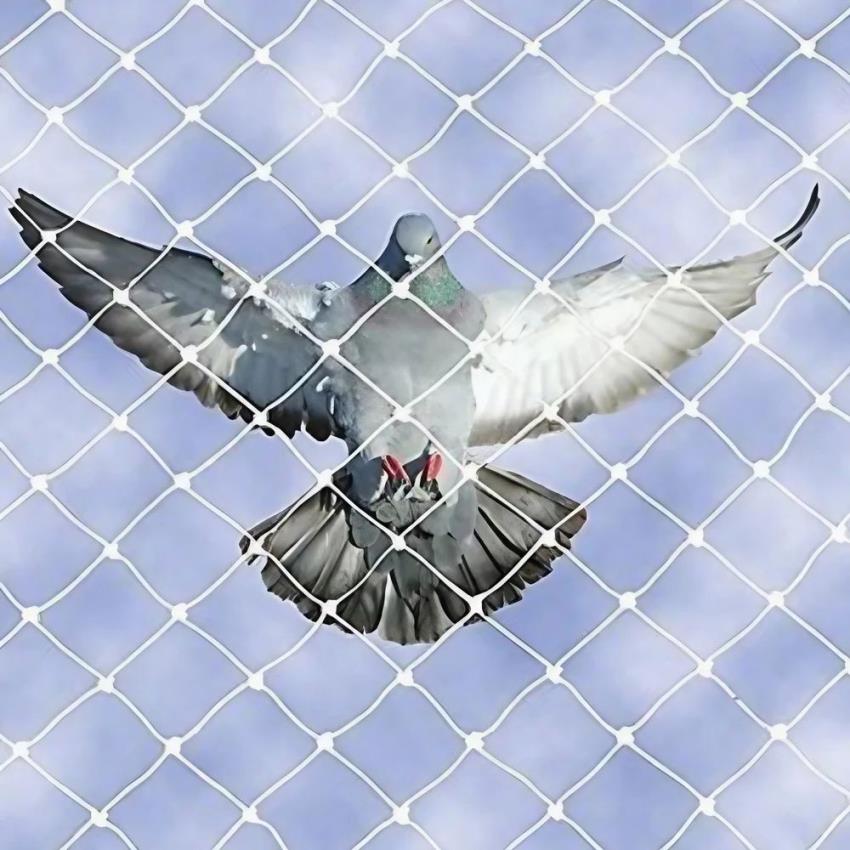 | Bird Netting Global Pest Control Bird Netting Services has more than 6 years of experience in Bird Netting Services. View product → |
Examine anchors and the facade without relying on a tug test
A bird netting child safety inspection should confirm the condition of every fixing without relying on a manual tug. Inspect from both the installation side and the child-accessible side using safe access, strong lighting and close-up photographs.
Compare the installed layout with the installation drawing or original photographs to identify moved anchors, altered cable routes or missing components.
- Examine anchor plates, eye bolts, rivets, screws and washers for corrosion, looseness, distortion, failed sealant and movement marks.
- Inspect the facade around each fixing for radial cracks, spalling concrete, loose render, open mortar joints, damaged brickwork and water staining.
- Check cables for broken strands, kinks, flattened sections, corrosion, slack and contact with sharp edges.
- Examine cable terminations, ferrules, thimbles, clamps and knots for slippage, sharp projections, exposed wire ends and accessible loops.
- Check corners and intermediate supports for detached hardware, uneven spacing and gaps created by facade movement.
Do not tighten or replace a fixing by guesswork; follow the manufacturer’s specified component and torque procedure, or refer damaged substrate to a competent facade professional. A bird netting maintenance programme for commercial buildings should record each anchor location, defect, photograph, action and reinspection date.
Include nearby ledges, pipes, air-conditioning units and cable trays that could give a child a foothold on either side.
Frequently asked questions
Where should a child safety inspection of commercial bird netting begin?
Start at the entire perimeter and inspect every child-reachable opening, including edges, corners, overlaps, seams, pipe cut-outs, facade junctions, and gaps behind the net.
What hazards can a bird netting inspection reveal besides low tension?
Check for loose edges, damaged seams, excessive gaps, sharp wire or fasteners, trapped objects, climbable fixtures, and contact points near balconies or façades.
When should a commercial building inspect its bird netting?
Set routine inspection duties and inspect after severe weather, building alterations, impact, complaints, visible damage, or work near the netting.
How should commercial bird netting repairs be controlled?
Isolate the unsafe area, record the defect, use suitable access equipment, control dropped-object risks, repair or replace damaged components, and document the completed work.