

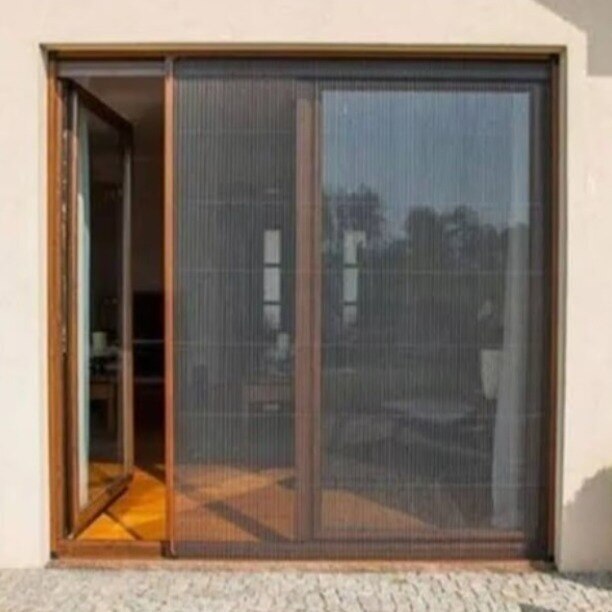
A pleated screen can suit a reception room or staff office that needs open windows during part of the day, but dust, traffic, handles, tracks, and emergency access can make it a poor fit elsewhere. By the end, you will be able to match the screen to each opening, specify the measurements and operating clearances, and decide whether a trial installation is justified.
Key takeaways
- Use pleated screens in clean offices with controlled foot traffic.
- Avoid them on forklift routes, loading bays, and frequently used exits.
- Measure the full opening, including sill, frame, and retraction space.
- Test one installed sample for airflow, operation, and emergency access.
Where a pleated screen fits—and where it becomes a liability
The strongest case for a pleated mosquito net for factory offices in pune is a relatively clean staff office, reception room, meeting room, or supervisor cabin where windows open periodically and the screen can retract between uses. It suits controlled foot traffic, not openings treated like industrial access points.
| Space or condition | Fit | Why |
|---|---|---|
| Staff office, reception, meeting room | Suitable | Periodic ventilation and low impact let the screen fold aside when unused. |
| Air-conditioned office | Suitable with a rule | Close the screen before opening the window; keep the window shut while the screen is retracted, or insects and cooled air escape. |
| Dusty production bay or loading area | Poor fit | Dust clogs tracks, while vibration and airborne grit accelerate wear. |
| Service window or busy office doorway | Conditional | Frequent passing demands a robust frame and disciplined opening and closing. |
| Upper-floor window needing fall protection | Screen alone is unsuitable | A pleated screen is not a security grille, fall-prevention barrier, or child-safety guard. Fit the safety guard separately without blocking rescue access. |
Rule out the screen where any of these hazards dominate:
- Welding sparks, grinding debris, hot work, or solvent vapours can damage mesh and retaining profiles.
- Forklifts, carts, pallets, or swinging doors can strike the frame.
- Staff need a permanently open, unobstructed emergency route.
- An uneven or contaminated surround prevents the side channels and bottom track from sealing.
A fine mesh cannot compensate for gaps at the sill, meeting stile, or frame. Perform a site check before treating the opening as protected.
Match the screen to the opening before you order
Measure the clear opening at the top, middle, and bottom before ordering. For a mosquito net for industrial offices in pune, record width, height, frame depth, and the reveal’s plumb and level; one tight measurement does not compensate for a twisted surround.
| Opening type | Usually suitable when | Installation warning |
|---|---|---|
| Hinged or casement window | A flat inner reveal leaves room for side channels | Handles, stays, and opening restrictors must clear the mesh and track |
| Sliding window | The bottom track is sound and the screen can sit on a separate plane | Existing rollers, dirt, or raised tracks can prevent a seal |
| Large pane or service window | The span has adequate support and the panel can stack to one side | A wide screen can bind or sag if the fixing surface flexes |
| Hinged or sliding door | Staff movement is controlled and the bottom track stays clean | Frequent trolley traffic and impacts make damage likely |
| Irregular or damaged frame | Only after levelling or building a secondary frame | Sealant, chipped paint, and uneven masonry create daylight at corners |
Check these points on site:
- Measure frame depth from the fixing face to the nearest handle, latch, glass bead, curtain, or blind.
- Place a straightedge across each reveal; gaps show where channels will need packing or a new frame.
- Confirm the stacked screen will not cover a handle, fire-exit route, or window-cleaning access.
- Open and close the window while checking that its track does not collide with the bottom rail.
A catalogue size cannot reveal these conflicts. Use the smallest measured clearance only after allowing for the channel and fixing hardware.
Check daily operation, airflow, and emergency access
During a shift, the screen must travel smoothly, stay stable when stacked open, and close fully without binding. A pleated mosquito screen for factories in Pune only controls insects when the mesh spans the opening and the latch or tensioning system holds it correctly.
A stiff handle or low handle will quickly become an obstacle during frequent staff movement.
For air-conditioned offices, close the screen before opening the window, then close the window when the screen is retracted. Leaving both open wastes cooled air and defeats insect control. A closed mesh permits ventilation but restricts airflow compared with an open window; fine mesh adds more resistance and collects dust faster.
Window cleaning must not require leaning through the frame or forcing the folds aside. In an emergency, the screen must retract completely without a tool and must not block the required escape opening. It is not a security grille or fall-prevention barrier, so upper-floor windows need separate protection that does not reduce rescue access.
Use the installed sample to check:
- Employees can open, close, and latch it quickly while carrying files or equipment.
- The panel remains stable in its open position and does not catch on handles, tracks, or vibrating frames.
- Corners and meeting points show no visible daylight when closed.
- Mesh and tracks can be cleaned or removed without damaging the window frame.
- Airflow remains acceptable with cooling off and with the air-conditioner running.
- The fully retracted screen leaves the emergency route and cleaning access clear.
Specify mesh and maintenance for Pune factory conditions
Specify the mesh by material, aperture, edge finish, and resistance to the site’s dust and handling. For a factory window mosquito net in pune, ask for a physical sample and confirm that welding sparks, grinding debris, solvent vapours, forklifts, and carts will not reach it.
| Requirement | Settle before ordering | Reject or revise if |
|---|---|---|
| Mesh | State material, aperture, pleat width, UV suitability, and replacement method | The supplier says only “fine mesh” or cannot supply a repair panel |
| Track | Use rigid side channels, a stable bottom track, brush seals, and accessible fixing points | Dust, paint, sealant, or an out-of-square frame leaves daylight at corners |
| Cleaning | Confirm whether mesh and tracks can be removed without damaging the frame | Cleaning requires dismantling the window or forcing the pleats |
| Damage | Define the response to torn mesh, bent profiles, broken cords, and impact damage | Staff are told to tape, bend, or continue using a damaged screen |
The quote is incomplete if “clean regularly” is the entire maintenance plan. Require these procedures in writing:
- State who inspects the mesh, channels, brushes, junctions, and fixings, and record findings after impact or building work.
- Vacuum loose dust with a soft brush, then use a manufacturer-approved damp cleaning method; prohibit solvents and abrasive tools unless specifically approved.
- Clear the bottom track without pushing grit into bearings or seals.
- Name the replacement mesh, spare brush seals, lead time, and the person authorised to remove and refit them.
- Set an acceptance check: smooth travel, stable stacking, no visible daylight, and no binding after cleaning.
Use one installed sample to make the final decision
Install one fully finished sample in the busiest representative office, not in a showroom frame. For a pleated mosquito net for factory offices in Pune, choose a staff office, reception room, or meeting room with the same window type and frame condition found elsewhere.
1. Photograph the opening before installation and record width, height, plumb, sill condition, handle clearance, and the screen’s stacked width.
2. Run the sample through every shift. Ask different employees to open, close, latch, and retract it while carrying files, cleaning the window, and moving through nearby doors.
3. Test it with the window open and the air-conditioner running. The operating rule is simple: close the screen before opening the window, and close the window before retracting the screen.
4. Inspect after dry, dusty days and wet weather. Look for binding, track contamination, loose mesh, movement from vibration, and visible daylight at corners or junctions.
5. Have GLOBAL PEST CONTROL document cleaning time and demonstrate mesh and track removal without damaging the frame.
Approve bulk installation only if the panel travels smoothly, stays stable when open, closes completely, and employees use it without reminders. If the sample fails in one condition, fix that detail and repeat the trial before ordering identical units.
This process gives a mosquito net for industrial offices in Pune a practical pass-or-fail test rather than a brochure-based approval.
Related product
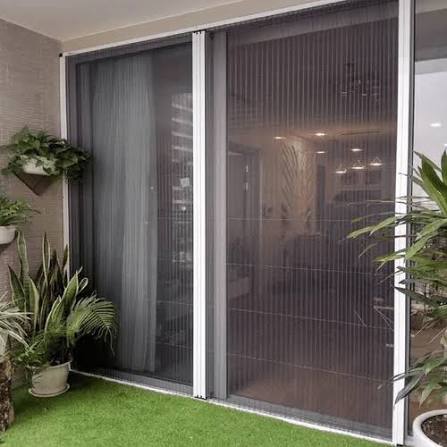 | Mosquito Net A plated mosquito net is a durable insect protection solution made with a metal frame, usually coated with rust-resistant materials like aluminum or... View product → |
Frequently asked questions
Where does a pleated screen fit in a Pune factory office?
Use it in relatively clean staff offices, reception rooms, meeting rooms, and supervisor cabins where windows open periodically and foot traffic is controlled.
When does a pleated mosquito screen become a liability?
Avoid it on industrial access points, forklift routes, loading bays, and openings used constantly by people or equipment. Repeated contact can damage the mesh and restrict movement.
What should you measure before ordering a factory window mosquito net in Pune?
Measure the complete opening width and height, frame depth, sill condition, nearby handles, and the space needed for the screen to retract. Check whether the opening is a window, door, or emergency route.
How should you test a pleated mosquito screen for a factory office?
Install one sample and check daily opening and closing, airflow, mesh visibility, cleaning access, latch operation, and whether staff can use the opening safely during an emergency.